
THE PLACEMENT OF A CHILD WITH A FAMILY OF A DIFFERENT RACE OR ETHNICITY
Transracial Adoption: Talking About Race, Identity, Culture, and Connection
Some children come home and look exactly like their parents. Some do not.
Heart to Heart Adoptions has supported transracial families for more than 25 years.
Resources
Transracial right for you?
Cultural identity
Multiracial Community
Explaining race to child
Racial Rudenss is teachable
Raising a Black Child as a White Parent
Compliment that isn't a compliment
Dear Birth Mother
Birth family death
What transracial adoption actually means
Transracial adoption refers to any adoption in which the child and the adoptive family are of different racial or ethnic backgrounds. In domestic infant adoption in the United States, this most commonly involves white families adopting Black or biracial children, though it encompasses many combinations
It is legal, it is practiced widely, and it is supported by research as beneficial for children. Adoptive parents, however, need to recognize that outcomes for children in transracial adoptive families are distinctly different depending on how those families approach race. Love is necessary. It is not sufficient on its own
Start Here: Exploring Topics That Matter
Choose a topic to find guidance, stories, and practical tools.
Talk to Children About Race
Age-appropriate wasy to have honest conversations about race.
Building a Multiracial Community
Why community matters and how to build meaningful connections.
Raising a Black Child as White Parents
Reflections, surprises, and lessons from adoptive parents.
Honoring birth Family Identity
Ways to honor your child’s heritage and birth family story.
Watch Real Stories
Honest stories from people Heart to Heart Adoptions has worked with.
Open Adoption
Learn about open adoption and the different types of openness.
A child might need you
This adoptee describes how a single mother saved him.
Birth mother stays connected
They became an extended family.
What the research says
Studies consistently show transracially adopted children can thrive under the right conditions.
Children in transracial families can thrive
Secure attachments, academic achievement, and healthy self-esteem — when families take racial identity seriously and engage actively with their child’s heritage.
Race-neutral environments carry real risk
Children raised without a meaningful connection to their racial heritage often struggle with identity in adolescence. This can include depression, disconnection, and not belonging anywhere.
Love is necessary but people need more
Everything you share with us is private and handled with respect and care.
Where you live is a parenting decision
Your child needs to see people who look like them living full, ordinary lives. They need to see people who look like them in the neighborhood, in the school, and as friends. You will have to make this happen.
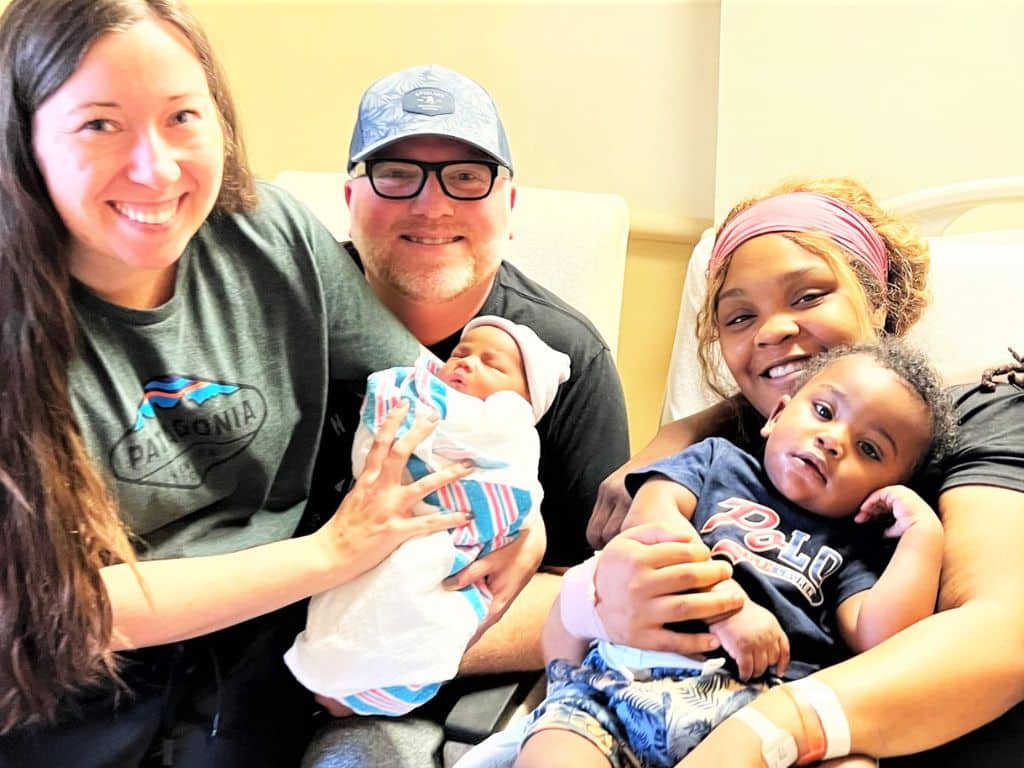
Is this right for your family?
This question deserves an honest answer rather than a reassuring one. Readiness requires more than love and good intentions.
For adoptive families
Are you ready to raise a child whose racial identity you cannot share by instinct alone? Readiness requires more than love and good intentions.
For birth mothers
You have the right to ask hard questions about how your child’s racial and cultural identity will be honored by any family you consider.
Already parenting
The families who do this well made race a normal topic early and stayed curious long past the point where curiosity was comfortable.
“When our little Black daughter was handed to us, I held her tight and knew our love would protect her from any racial bias or pain. I was living in a delusional dream world.”
— Heart to Heart adoptive parent
In-Depth Guide
Explore each topic in more detail.
Is transracial adoption legal in the United States?
Yes. The Multiethnic Placement Act of 1994 and the Interethnic Adoption Provisions of 1996 prohibit agencies receiving federal funding from denying or delaying placements on the basis of race, color, or national origin.
Do transracially adopted children struggle with identity?
Research shows they can develop strong, healthy identities — but outcomes are significantly shaped by how intentionally families engage with race and cultural heritage. Children in families that actively nurture racial identity fare measurably better.
What is the Multiethnic Placement Act?
MEPA, amended by the Interethnic Adoption Provisions, requires agencies receiving federal funding to make diligent recruitment efforts reflecting the racial/ethnic diversity of children in the system, while prohibiting race as the sole basis for denying a placement.
Can a birth mother request a family of a specific race for her child?
Yes. Birth mothers in domestic infant adoption have broad rights to select the family that will raise their child, and race is a factor they are legally permitted to consider. An ethical agency will support whatever criteria matter to her.
What should I look for in an agency for transracial adoption?
Mandatory pre-adoption training on racial identity development, experience with transracial families, honest conversations about community and readiness, and respect for the birth mother’s role in cultural identity. If an agency makes it sound simple, look elsewhere.
How does a birth mother know a transracial adoptive family will honor her child's cultural identity?
Ask directly about their community, neighborhood, church, social circle, what they have read, and what training they have done. Families who have done the work will have specific answers. Generalities are a warning sign.
Do children struggle with identity?
Families that engage with diverse populations and are race and culturally aware have children who fare much better.
We're Here for You
Whether you're just starting to explore or ready to talk, our compassionate team is here to listen and support you—without pressure or judgment.
You don't have to do this alone.
We're here to walk beside you—every step of the way.
Call or Text Anytime
801-563-1000
Last Reviewed: