
WHY YOUR NEIGHBORHOOD MATTERS
Building a Multiracial Community:
Where you live and who you associate with matters when you adopt a child from another race.
Resources
Transracial right for you?
Cultural identity
Multiracial Community
Explaining race to child
Racial Rudenss is teachable
Raising a Black Child as a White Parent
Compliment that isn't a compliment
Dear Birth Mother
Birth family death
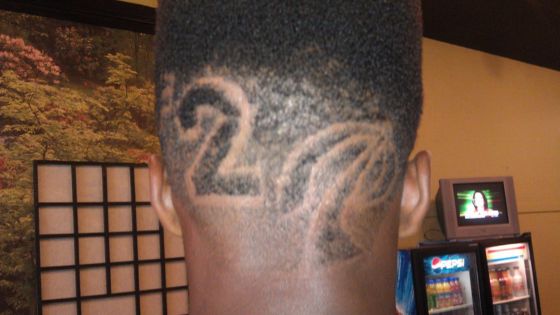
The barber was an artist.
His shop was over an hour from home. He always remembered David’s name. What sport the high schooler was playing, what was coming up next in the season. During basketball, the artistic barber carved a basketball player into the back of the boy’s head. During football season, he added David’s jersey number. During track season, he created slogans that followed the athlete all the way to state competition.
We drove that far. We paid that kind of money. Not because we couldn’t find a closer barber. Because we understood, by then, that what happened in that chair was about more than a haircut.
Our caseworkers have walked this path with hundreds of families. A conversation costs nothing.
Call 877-437-3424
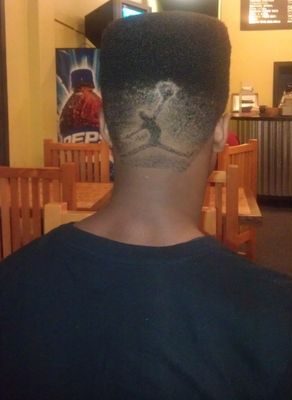
It was about a Black man who knew David's name
That barber was one of the most important people in our son’s childhood. He wasn’t a relative, a mentor, or a coach. He was the man we drove an hour to see because his talent said, “You belong to something, and I see you.”
That’s what building a multiracial community looks like. It’s rarely grand. It’s mostly just intentional.
The neighborhood is a parenting decision
Where your family lives shapes almost everything about your child’s daily experience. For children raised in transracial adoptive families, that environment carries a particular weight.
It isn’t that white families can’t love these children well. They can, and do. It’s that love alone can’t give a child the experience of being seen as ordinary by someone who looks like them.
What "community" actually means
This doesn’t mean you need to move to a different neighborhood tomorrow, or that there’s something wrong with where you live now. It means building intentionally, seeking out connections with people of your child’s racial background in every area of your family’s life.
A note for birth mothers
If you are making an adoption plan, you have the right, and we would argue the responsibility, to ask prospective adoptive families about this directly.
Ask where they live. Ask about the diversity of their neighborhood, their church, their social circle, their children’s school. Ask what intentional steps they’ve taken, or plan to take, to make sure your child will have access to people who look like them.
Read more about becoming a biracial family.
Learning everything you can and understanding the experiences of others will help you help your child.
Cultural Identity in Transracial Adoption
Understanding their own identity and loving their life is our goal. Click here. ➔

Transracial Adoption Resources
Learn from others who have gone through this experience. Read more. ➔
Talking About Race Hub
Understand this experience you are headed into. Read more. ➔
Want to Know More
Your Questions, Answered
Do I need to move to build a multiracial community for my adopted child?
Not necessarily, but where you live matters. Look for diverse churches, sports programs, cultural organizations, and professionals — barbers, pediatricians, coaches — who share your child’s racial background and build those relationships consistently over time.
What does a racial mirror mean for an adopted child?
A racial mirror is an adult who shares your child’s racial identity and is a consistent, positive presence in their life. Research shows that children of color with meaningful relationships with adults who look like them develop stronger, healthier racial identities.
How do I find community for my transracially adopted child?
Start with your child’s interests. Look for coaches, teachers, artists, and mentors who share those interests and your child’s racial background. Seek out diverse churches, schools, and neighborhoods. Build relationships, not just presence.
Is it okay to move for the sake of my transracially adopted child?
Absolutely. Moving to a more diverse community for the sake of your child’s identity development is exactly the kind of intentional parenting transracial adoption requires.
MORE INFORMATION--Community, Identity & Parenting
Last Reviewed: